


Bricks breaker ace
4.191.00 Reviews
App Specs
- Version
- 1.7.1
- Updated On
- License
- Free
- Downloads
- 500,000+
- Developer
- PalebluedotStudio
- Categories
- Arcade
- Platform
- Android
Screenshots
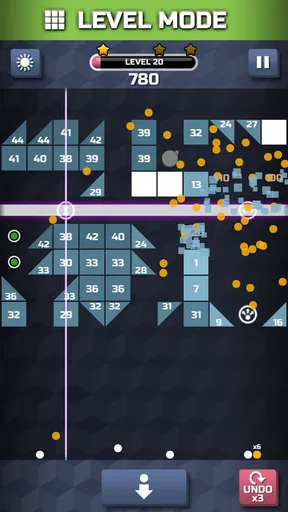
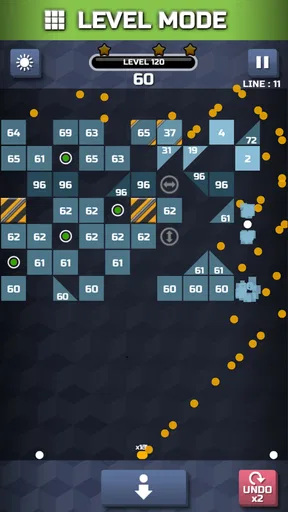
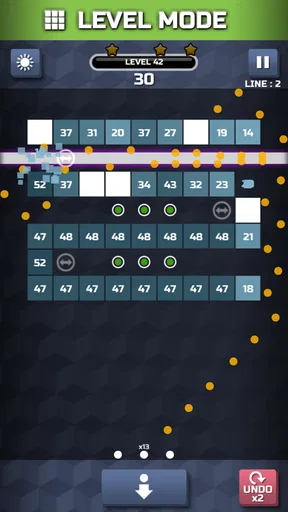
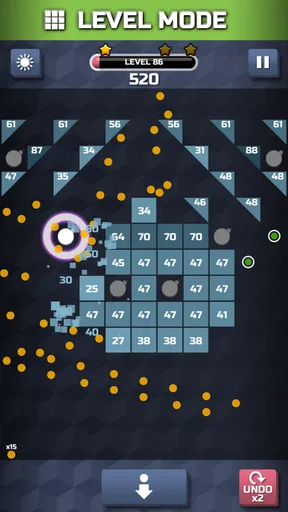
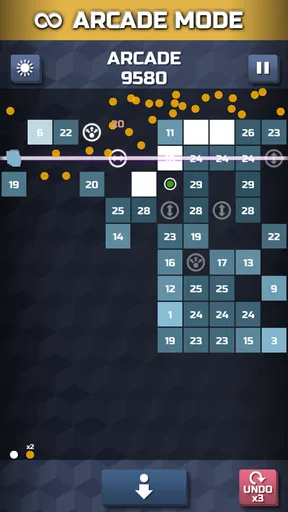
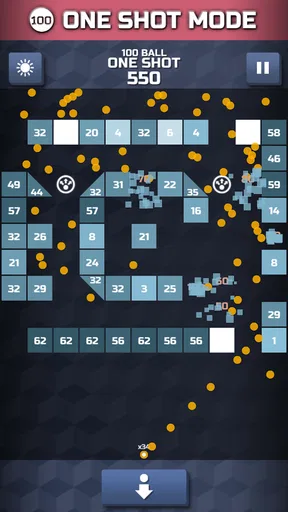
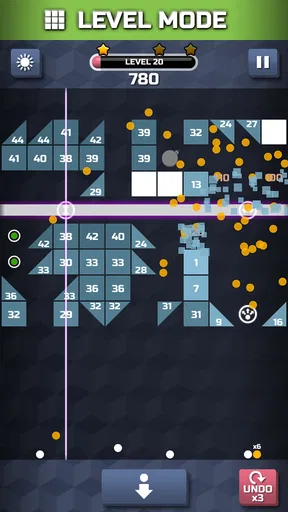
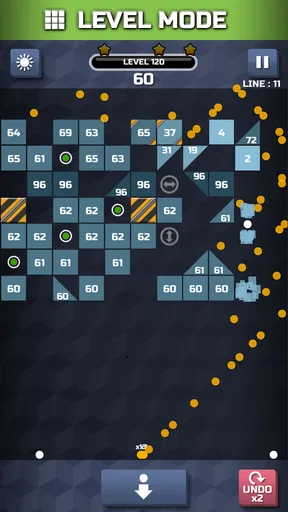
 Analysis by AppCompare
I picked up Bricks breaker ace expecting a simple arcade distraction, and that is exactly where its appeal lies. The idea is immediately understandable: aim, shoot the ball, and clear the blocks. I did not need a tutorial-heavy introduction or a long explanation before playing. Within moments, I was making shots, watching the ball bounce through the formation, and deciding whether a risky angle might produce a better result.
That quick start makes it a natural fit for short sessions. I can imagine opening it while waiting for a coffee, taking a few turns during a commute, or playing one round before putting my phone away. It is not trying to replace a large adventure game or a deep strategy title. Instead, this is a compact arcade game built around immediate input and the small satisfaction of turning a crowded block arrangement into an empty screen.
PalebluedotStudio keeps the central action clear, and the game’s free entry point makes it easy to try without committing money first. It is rated for Everyone, so the presentation is accessible to a broad audience. The current version is 1.7.1, and the game runs on Android 8.0 or later. Those details matter most for anyone using an older phone, because compatibility is something worth checking before expecting a smooth installation.
Why the first few turns work so well
The strongest part of the experience is the lack of friction between opening the game and taking a shot. In many mobile arcade games, the first minutes are filled with menus, rewards, pop-ups, or instructions that delay the actual play. Here, the basic concept does most of the teaching. The ball moves, blocks react, and the next decision becomes obvious through play rather than through a lengthy explanation.
I especially like this clarity when I am not in the mood to concentrate intensely. The game gives me something active to do, but it does not demand that I remember a complicated control scheme. The essential skill is reading the arrangement and choosing an angle. That makes the experience approachable for someone who rarely plays games, while still leaving room for better judgement from players who enjoy squeezing more value out of every shot.
The pleasure is immediate but modest. Breaking blocks is satisfying because the result is visible at once, yet the game does not overwhelm the moment with unnecessary drama. That restraint suits its purpose. If I want a quick mental reset, I would rather have a clear shot and a visible result than a large story sequence that I have to follow across several sessions.
There is also a useful difference between simply aiming at the nearest block and thinking about the ball’s path. A direct hit may remove one obstacle, but a carefully chosen angle can send the ball into a wider section of the formation. My practical tip is to look beyond the first impact point. The best shot is often the one that creates several future contacts, even if it does not appear to be the fastest way to hit a block.
Worth Reading Before You Choose

EA SPORTS FC Mobile 26 Is a Bigger Football Game, but It Takes Time

Flipboard Shows What News Apps Must Do Beyond the Feed

Switching to Android Auto Means Rethinking Your Driving Routine

Google Calendar Makes a Crowded Week Easier to Manage

Ludo King Makes the Most of the Minutes Between Plans

Baby Panda World Brings Quick Play to Modern Phones, but Its Game Library Feels Busy
That small change in thinking gives the game more texture than its short summary suggests. I am not only pointing at a target; I am trying to predict how the rebound will affect the rest of the turn. It is still easy to understand, but the decision-making becomes more interesting once I stop treating each block as an isolated target.
A rhythm designed for spare minutes
The session rhythm is the main reason I would recommend this to casual players. A round can begin almost instantly, and the core action does not require a large uninterrupted stretch of time. I can play with full attention when I want to improve my aim, or use it as a lighter activity when my focus is divided. That flexibility is more valuable than it sounds on a phone.
For example, I might open the game while waiting for an appointment. I can take a few shots, put the phone down when my name is called, and return later without feeling that I abandoned a complicated mission. This is where the game feels more practical than many alternatives in the arcade category. A fast endless runner may punish a moment of distraction, while a large puzzle game may require remembering a board state. The block-breaking format is easier to understand again after a brief interruption.
That does not mean every moment is equally relaxed. When the arrangement becomes harder to read, I still need to pay attention to angles and rebounds. A careless shot can leave an awkward layout for the next turn, so the game rewards a little patience. The useful balance is that concentration improves my results, but I do not need perfect concentration merely to enjoy the attempt.
I found it helpful to separate two kinds of play. When I have only a minute, I make the obvious safe shot and enjoy the quick feedback. When I have more time, I study the formation and search for a route that may produce several collisions. This makes the same basic mechanic feel different depending on how much attention I can give it. It also prevents me from judging every session by the same standard.
Players who want a game with a constant stream of new mechanics may find this rhythm too narrow. The appeal comes from refining a familiar action, not from collecting a large set of abilities. I would choose it for a calm, repeatable break rather than for a dramatic mobile gaming session.
Returning after a distraction
Interruption tolerance is one of the game’s quiet strengths. The concept is simple enough that I can return after checking a message or handling an everyday task without needing to reconstruct a complicated situation. I still want to pay attention to the current block arrangement, but I do not have to remember a story, a map, or a chain of objectives.
This makes it suitable for the kind of fragmented play that phones encourage. I can start a session at home, stop when something needs my attention, and come back when I have a free moment. That matters to me because a game can be enjoyable in theory but inconvenient in practice if it assumes every session will be uninterrupted.
My advice is not to chase a clever shot when you know you may be interrupted immediately. A complicated angle is more rewarding when I can watch the full result and think about the next turn. If I am about to put the phone away, a straightforward shot is often the better choice. That is not a rule imposed by the game; it is a way of matching the play style to real life.
The game also works well for shared, informal play. I can hand the phone to someone who has never seen it, explain the goal in one sentence, and let them try. That makes it more approachable than arcade titles with several buttons or timing systems. It is the kind of game that can sit quietly on a phone until there is a spare moment, rather than demanding a scheduled commitment.
There is a trade-off here. The same simplicity that makes returning easy can make long sessions feel less substantial. If I want a game that remembers a complicated journey or offers a strong sense of progression, this is not the right choice. Its value is in being ready quickly, not in creating a large world to revisit.
Where replay value comes from
The replay value depends heavily on whether I enjoy improving decisions inside a limited rule set. The game does not need a complicated system to make another attempt worthwhile. I return because I want to find a cleaner angle, avoid wasting a shot, or handle a block arrangement more intelligently than before.
That kind of replay is personal rather than theatrical. I am not necessarily coming back to discover a new story chapter; I am coming back to test my judgement. The difference between a careless attempt and a thoughtful one can be easy to feel, especially when a good angle causes the ball to keep working through the formation.
One non-obvious habit that improved my sessions was to value future positioning over immediate destruction. Removing one block quickly can look productive, but a shot that opens a better route may be more useful in the following turn. I try to inspect the spaces around the blocks and consider where the ball is likely to travel after the first contact. This turns each attempt into a small planning exercise without making the game feel slow.
Another useful approach is to avoid overcorrecting after a poor shot. It is tempting to respond by taking an even more ambitious angle, but sometimes a controlled shot is better for recovering the layout. I treat the next turn as a chance to rebuild a favorable path rather than trying to solve everything immediately. That mindset makes mistakes less frustrating and keeps the session enjoyable.
Still, the repetition has a limit. Players who need frequent surprises may feel that the central action becomes familiar quickly. I would not install this expecting the constant novelty of a larger arcade collection. The question is whether aiming and bouncing remain pleasant after the first impression. For me, they do, but mainly in short bursts. The game is strongest when I leave it wanting another turn, not when I force myself through a long sitting.
How it compares with other arcade choices
Compared with an endless runner, this game feels calmer and more deliberate. Endless runners usually focus on rapid reactions, continuous movement, and avoiding immediate hazards. Here, I have more time to consider a shot before committing. That makes it a better option when I want a little control and planning instead of constant reflex pressure.
Compared with a traditional match-style puzzle game, the appeal is more physical. I am thinking about trajectories and rebounds rather than arranging several pieces into a pattern. Someone who enjoys compact spatial decisions may prefer this, while someone who wants combinations, color matching, or a more elaborate puzzle structure may find a different arcade title more satisfying.
It also differs from large arcade games that build their identity around characters, missions, or unlockable content. This game’s identity comes from the shot itself. That focus is a benefit when I want an uncluttered break, but it is a weakness if I expect a broad progression system. I would choose it over a busier alternative when I have only a few minutes and do not want to learn another set of rules.
The free price lowers the barrier to testing that fit. There are in-app purchases ranging from $0.99 to $99.99 per item, so I would pay attention to the purchase flow and avoid treating optional spending as part of the basic reason to play. The important point for a casual user is that the game can be approached as a free download, while anyone sensitive to in-app offers should make sure purchases are controlled on the device.
The game has attracted more than 500K installs and holds a 4.1 average from around 2.1K ratings, with 91 written reviews. I read those figures as a sign that the concept has found a real audience, not as proof that every player will enjoy the same level of repetition. Its appeal is specific: straightforward block breaking, quick access, and a gentle learning curve.
Who should try it, and who should skip it
I would recommend it to someone who wants a free arcade game for short, low-pressure sessions. It suits players who like aiming, watching a plan unfold, and making small improvements without learning an elaborate control system. It is also a good candidate for a family device because its Everyone age rating and simple premise make the first interaction approachable.
I would be more cautious about recommending it to someone who needs a strong narrative, competitive multiplayer, deep customization, or a constantly changing set of mechanics. Those players may quickly feel that the game is too focused on one action. I would also suggest skipping it if the satisfaction of repeating a familiar shot does not appeal to you. No amount of polish can change the fact that the core loop stays deliberately narrow.
For older Android users, the minimum requirement of Android 8.0 or later is the practical checkpoint. For everyone else, the more important question is not whether the game is demanding to understand, but whether its simple rhythm matches your habits. It is at its best as a game I can open, understand, and enjoy without preparation.
My casual verdict
After spending time with it, I see Bricks breaker ace as a dependable small arcade game rather than a major gaming destination. Its best qualities are immediate clarity, forgiving session length, and the satisfying possibility of turning one well-chosen angle into a productive chain of rebounds. I can play it while waiting, stop without much mental baggage, and return later with the goal still clear.
The limitations are equally straightforward. The rule set is narrow, and replay value depends on enjoying refinement more than novelty. Long sessions may expose that repetition, and players looking for a richer progression system should choose a different kind of arcade experience. The in-app purchase range also means I would keep an eye on accidental spending, especially on a shared device.
My final recommendation is simple: try it if you want a clean, interruption-friendly block-breaking game that delivers its main idea quickly. I would not present it as a replacement for a deeper puzzle or action game, but I would happily keep it installed for those spare minutes when I want a little focus without a large commitment. That is where PalebluedotStudio’s game makes the most convincing impression.
Pros
- Simple one-touch controls make it easy to start playing immediately.
- Short levels fit well into quick gaming sessions.
- Colorful brick designs and effects keep the visuals engaging.
- Increasing difficulty provides a satisfying challenge over time.
- Offline play is convenient when you have no internet connection.
Cons
- Some levels can feel repetitive after extended play sessions.
- Progress may depend heavily on upgrading power-ups.
- Ads can interrupt the game and affect the overall flow.
- Later stages may feel unbalanced or overly difficult.
- The gameplay offers limited variety beyond breaking bricks.
FAQs for Bricks breaker ace
What is Bricks Breaker Ace and how is the game played?
Bricks Breaker Ace is a casual arcade game based on the classic brick-breaking formula. You launch balls toward numbered blocks, trying to clear as many bricks as possible before they reach the bottom of the screen. The main challenge is choosing the best angle so one shot can bounce around the level and destroy several bricks at once. It is easy to learn, but later stages require careful planning and timing.
Is Bricks Breaker Ace free to download and play?
Bricks Breaker Ace can generally be downloaded and played without an upfront purchase, making it accessible to casual players who want a quick arcade experience. However, the free version may include advertising, optional in-app purchases, or other limitations depending on the platform and region. Before downloading, users should check the current store listing for pricing, available purchases, and any subscription-related information.
Does Bricks Breaker Ace require an internet connection?
The core brick-breaking gameplay is usually suitable for short offline sessions, which makes Bricks Breaker Ace convenient for commuting, traveling, or playing when a stable connection is unavailable. Nevertheless, certain features may depend on internet access, including advertisements, rewards, leaderboards, cloud synchronization, updates, or promotional events. Availability can vary by device version, so it is worth testing offline mode after installation.
Is Bricks Breaker Ace suitable for children and beginners?
Bricks Breaker Ace is straightforward enough for beginners because its controls are typically based on aiming and releasing a shot rather than using complicated commands. The colorful presentation and short rounds can also appeal to younger players. Parents should still review the app’s advertising, in-app purchase options, privacy information, and age rating, since these details may differ between Android and iOS versions.
What should I know about ads, purchases, and game progression?
Players should expect progression to become more demanding as brick numbers increase and shots require more precise angles. Depending on the version, the game may display ads between rounds or offer optional purchases connected with removing advertisements, gaining bonuses, or improving the playing experience. These purchases are not necessarily required to enjoy the basic game, but users should review payment settings carefully, especially on shared family devices.


